

It has been one helluva week. You know it has been one helluva week. I know it has been one helluva week. So today we put the war down for a few minutes and look at what else is happening on this planet — because a lot of it is genuinely, quietly, stubbornly good.
Five stories. All sourced. No caveats required.
1. THE ORANGUTAN WHO TOOK TWO YEARS TO DECIDE, THEN CROSSED
When a road was upgraded through prime orangutan habitat in North Sumatra, Indonesia, it severed a forest community in two. On one side: the Siranggas Wildlife Reserve. On the other: the Sikulaping Protection Forest. Between them: a busy public road, and roughly 350 critically endangered Sumatran orangutans with no safe way across.
The Sumatran Orangutan Society and their Indonesian conservation partners at TaHuKah built five rope canopy bridges above the road — each requiring just 200 meters of rope, installed in four to five days. Then they attached camera traps and waited.
For two years, nothing. Squirrels crossed. Langur monkeys crossed. Macaques crossed. Gibbons — a promising sign — eventually crossed. But no orangutans.
The orangutans knew the bridge was there. They just weren’t sure about it. They built nests near the bridge. They lingered at the edges. They tested the ropes, then retreated. “They observe,” said Erwin Alamsyah Siregar, executive director of TaHuKah. “They don’t rush. They watch, they try, they retreat. Only when they’re certain it’s safe do they move.”
Then one day, a young male crossed. A motion-sensitive camera caught the moment: he paused at the forest’s edge, gripped the rope with deliberate care, and stepped out into open air. Halfway across, he stopped and looked down at the road below. Then he kept going.
Conservationists called it the first documented case of a Sumatran orangutan using an artificial canopy bridge to cross a public road that had divided its habitat. “Seeing this young male orangutan confidently cross the road is a huge milestone for conservation,” said Helen Buckland of the Sumatran Orangutan Society, “— proving that it is possible to stitch fragmented forests back together.”
One orangutan has crossed. Three hundred and forty-nine have not yet. Conservationists hope he’s the first of many. The cameras are still running.
Sources: AP (wire — confirmed this session); CBS News (confirmed this session); NBC News (confirmed this session); Discover Wildlife (confirmed this session)
2. PEOPLE WHO COULDN’T WALK WITHOUT A WALKER NOW CAN
Stiff person syndrome is exactly as cruel as it sounds. A progressive autoimmune disorder, it causes severe muscle rigidity and painful spasms that can come on without warning — triggered by noise, touch, or stress. It is relentless, it has no approved treatments, and it gets worse over time. Many patients eventually cannot walk without assistance. Celine Dion has it.
This week, at the American Academy of Neurology’s annual meeting in Chicago, researchers presented results from a Phase II clinical trial of a single-infusion CAR-T cell therapy called miv-cel that are unlike anything previously seen for this disease.
Among patients who required a walking aid before treatment, 67 percent no longer needed one by week 16. Across all the trial’s primary and secondary endpoints — walking speed, stiffness, mobility, quality of life — 96 percent of patients showed meaningful improvement after a single infusion. Gains were sustained at week 24. There were no high-grade safety events.
The therapy works by targeting the immune cells that produce the rogue antibodies driving the disease — eliminating the source, not just managing the symptoms. Kyverna Therapeutics plans to file with the FDA for approval this year.
For patients who had been told there was nothing left to try, this is not a small thing.
Sources: Managed Healthcare Executive (confirmed this session); NeurologyLive / AAN 2026 (confirmed this session); EMJ Reviews (confirmed this session)
3. TROPICAL FORESTS BOUNCE BACK FASTER THAN ANYONE THOUGHT
Here is a fact about the natural world that should make you feel better about it: forests want to come back.
A study published this week in Nature, conducted at the Jocotoco Río Canandé Reserve in Ecuador, tracked biodiversity recovery across 16 taxonomic groups in naturally regenerated forest — land that had been cleared for farming and then simply left alone. What researchers found was striking: within 30 years, the regenerated forest showed 75 percent similarity to untouched original forest across all those groups. Trees, frogs, insects, birds — recovering together, without anyone planting a single seed.
The Chachi treefrog, highly sensitive to habitat change, was used as an indicator species throughout the study. Its presence in recovering forest was itself a sign of how far things had come.
With roughly 60 percent of tropical forests already lost or degraded worldwide, the finding carries real weight for conservation strategy. It means that protecting forests already quietly regrowing on abandoned agricultural land — not just pristine old-growth — is one of the highest-leverage moves available. The planet has more capacity to heal itself than we sometimes give it credit for. We mostly just need to get out of the way.
Source: Nature, Vol. 652, Issue 8112, April 30, 2026 (confirmed this session)
4. A TINY SPIDER NAMED AFTER PINK FLOYD IS LIVING IN YOUR WALLS AND EATING YOUR MOSQUITOES
Researchers from several South American institutions have identified a new species of spider in Colombia: Pikelinia floydmuraria. It lives in wall crevices. It is 3 to 4 millimeters long. It is named for Pink Floyd, because “muraria” is Latin for “wall,” and someone in the research team clearly had a sense of humor and an album collection.
Despite its size, it is extremely good at its job. Dietary analysis found that P. floydmuraria feeds primarily on ants, mosquitoes, and houseflies — including prey up to six times its own body size. It has developed a particularly efficient hunting strategy: build webs near artificial light sources, where insects congregate at night, and let the mosquitoes come to you.
It is almost certainly already living in your walls. It has probably been there for a while. It is not interested in you. It is interested in the mosquitoes.
The study, published in the journal Zoosystematics and Evolution, notes that the species may play a meaningful role in controlling urban pest populations across Colombian cities — largely unnoticed, entirely unbothered, doing its small and excellent work behind the baseboards.
We don’t need no pesticides.
Sources: ScienceDaily (confirmed this session); Popular Science (confirmed this session); EurekAlert / Zoosystematics and Evolution (confirmed this session)
5. A 14-YEAR-OLD CANCER SURVIVOR’S ONE WISH WAS TO FEED STRANGERS
Jude Baker was 12 years old when doctors found Ewing sarcoma in his body. It is a rare and aggressive cancer that forms in bones and surrounding tissue, and it does not ease you in gently. The chemotherapy that followed was brutal.
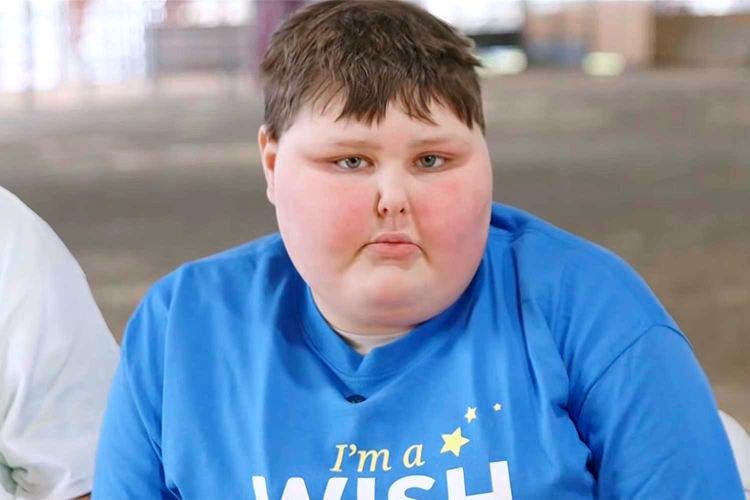
“It wasn’t even knowing I could die,” Jude said later. “The chemo... it hurt.”
His father sat beside him in the hospital and felt every bit of it. “I could feel his pain. And as a dad, that just... it sucks.”
Jude made it through. He rang the bell. And because of his diagnosis, he qualified for a wish through Make-A-Wish Georgia — the program that grants once-in-a-lifetime wishes to children facing critical illness. Most kids ask for a trip. A celebrity meeting. Something just for them, after everything they’ve been through.
During his months of treatment, Jude had looked out from hospital windows and waiting rooms and noticed people nearby experiencing homelessness. He kept noticing. By the time Make-A-Wish asked what he wanted, he already knew.
“I got out of my version of heck,” he said. “And I want to help others who are in a similar situation — their own version.”
Emily Campbell, who coordinates wishes for Make-A-Wish Georgia, said she had never seen anything like it. “His only wish was to give back to his community. That’s not a wish we even tell kids is an option. Usually we tell them you can wish to go somewhere, to be someone or to meet someone. Jude came up with this on his own. He never had a backup wish.”
Make-A-Wish and local volunteers packed backpacks with supplies, collected sleeping bags, and prepared hot meals. More than 300 people in and around Summerville, Georgia received help because of Jude’s wish.
He set one rule for the day: he would not eat until every single person in line had been served first.
Jude is now in remission. His community, moved by what he did, launched a GoFundMe to give his family the trip he didn’t ask for. It has raised more than $43,000. When his mother tried to explain why strangers were donating, he didn’t understand at first why people would do that for him.
“It doesn’t have to come from a wish,” he said. “You can help, too.”
Sources: 11Alive / Atlanta (confirmed this session); WCNC (confirmed this session); People Magazine (confirmed this session)
The world is still building canopy bridges for orangutans. It is still curing diseases that have no cures. It is still growing back forests we thought we’d lost for good. It is still discovering tiny spiders named after classic rock bands doing thankless work in the dark. And it is still producing 14-year-old boys who look out hospital windows, recognize suffering they understand, and decide the only thing worth wishing for is to do something about it.
Enjoy your Sunday.
“Whenever the people are well informed, they can be trusted with their own government.” — Thomas Jefferson, 1789
Much needed respite from overwhelming feeds of news that is needed to stay aware of, but weighs so heavy… thank you Rudy, Happy Sunday 💕
I’m not crying YOU ARE