
The Rest of the World Report | April 28, 2026 — Evening Edition
Iran War & Beyond

Weekday morning and evening editions. Saturdays once. Good news on Sundays. All sources labeled.
1. THE GULF BREAKS RANKS — AND THEN MEETS TO PRETEND IT HASN’T
The United Arab Emirates announced Tuesday morning that it was quitting OPEC. By Tuesday afternoon, its foreign minister was seated at a table in Jeddah with the leaders of Saudi Arabia, Qatar, Kuwait, Bahrain, and Oman for the first extraordinary Gulf Cooperation Council summit since the war began on February 28. The timing was not coincidental. It was a portrait of the Gulf’s central contradiction: a bloc projecting unity while one of its most powerful members has just broken from the cartel that gave the bloc its collective economic leverage.
The Jeddah summit was significant in its own right. It was the first in-person meeting of GCC leaders since Iranian missiles and drones struck energy infrastructure across all six member states during the war’s opening weeks. Saudi Crown Prince Mohammed bin Salman chaired the session. Qatar’s Emir Sheikh Tamim bin Hamad Al Thani, Bahrain’s King Hamad bin Isa Al Khalifa, and Kuwait’s Crown Prince Sheikh Sabah Khaled attended in person. The UAE sent Foreign Minister Sheikh Abdullah bin Zayed — not its president, Sheikh Mohamed bin Zayed — a protocol signal worth noting given the OPEC announcement hours earlier. The communiqué was direct. The GCC secretary-general read a statement expressing the bloc’s “categorical rejection” of Iran’s Hormuz tolling regime, calling for the strait to return to its pre-February 28 status, and demanding “urgent and unimpeded reopening” of the waterway. MBS stressed “unified Gulf action.” Qatar’s Emir called it a demonstration of “unified Gulf stance toward the war.”
The OPEC exit announced the same morning complicates that framing considerably. The UAE’s decision — effective May 1, ending nearly six decades of membership — was made, Energy Minister Suhail Al Mazrouei confirmed in a CNBC interview Tuesday afternoon, without consulting Saudi Arabia or any other country. “This is a policy decision,” he said. “It has been done after a careful look at current and future policies related to level of production.” When asked directly whether Saudi Arabia had been informed, he was unambiguous: “This is a sovereign national decision.” Saudi Arabia, OPEC’s dominant force and the UAE’s nominal ally, has not responded publicly.
The subtext of the OPEC exit extends well beyond quota arithmetic. NPR’s analysis Tuesday, confirmed this session, placed the exit in the context of a Saudi-UAE relationship that had already deteriorated sharply before the war — over Yemen, over economic competition, over Saudi Vision 2030 encroaching on territory Abu Dhabi had treated as its own. The UAE has positioned itself as Washington’s most dependable Gulf military partner throughout the conflict, hosting US bases, providing logistical support, deploying an Israeli-supplied Iron Dome battery, and deepening Abraham Accords ties with Israel. Its decision to quit OPEC on the eve of a GCC summit it still attended is a message to Riyadh delivered in the language Riyadh understands best: energy policy.
Rystad Energy’s Jorge Leon put the structural consequence plainly: “Saudi Arabia is now left doing more of the heavy lifting on price stability, and the market loses one of the few shock absorbers it had left.” With the UAE free of OPEC quotas from Friday, the cartel loses a member with 4.8 million barrels per day of capacity and the ambition to produce considerably more. The near-term impact on oil supply is muted — the UAE cannot pump what it cannot ship, and the Strait of Hormuz remains effectively closed, with just six ships attempting to cross Tuesday morning per MarineTraffic data, down from 130 per day before the war. But the longer-term implication is structural: a weaker OPEC, a wider Saudi-UAE rift, and a Gulf bloc whose public unity statements are increasingly at odds with its members’ individual calculations.
The Bahrain dimension adds a sharper edge to the day’s Gulf picture. A Bahraini court sentenced five people — two Afghans and three Bahrainis — to life in prison Tuesday for conspiring with Iran’s Revolutionary Guards to monitor vital facilities. Twenty-five others received sentences of up to ten years for sharing images of Iranian attacks and expressing support. This comes one day after Bahrain revoked the citizenship of 69 people for “supporting hostile Iranian acts.” The Gulf states are not merely projecting unity against Iran at summits. They are prosecuting it at home.
🌍 TRANSLATOR’S NOTE: Al Jazeera led its Gulf coverage Tuesday with the Jeddah summit as a milestone — the first in-person meeting of GCC leaders since the war began — while simultaneously running a separate analysis on the UAE’s OPEC exit as a structural blow to the cartel and to Saudi regional leadership. The two stories appeared side by side on Al Jazeera’s homepage, and no editorial effort was made to reconcile them. That juxtaposition is the honest framing: the Gulf is simultaneously projecting unity and fragmenting. Arab media, including Al Arabiya and The National, covered the Jeddah communiqué approvingly, emphasizing the collective rejection of Iranian tolling and the call for Hormuz to reopen. What received less attention in Gulf state media — unsurprisingly — was the Saudi-UAE rift that the OPEC exit makes explicit. Reuters and NPR provided the most direct accounting of that rift, tracing it through Yemen, Vision 2030 competition, and the divergent security postures the two countries have adopted during the war. The honest read is that the GCC issued a unified statement on Tuesday while one of its most powerful members made a unilateral decision that undermines the Saudi-led framework that has governed Gulf energy policy for six decades.
🇺🇸 WHAT AMERICAN READERS NEED TO KNOW: The Gulf states are America’s most important regional partners in this war — they host the bases, absorb the Iranian missile strikes, and hold the energy reserves that determine what Americans pay at the pump. Tuesday’s Jeddah summit projected unity. Tuesday’s OPEC exit revealed fracture. Both things are true simultaneously, and the fracture matters more for the long term. Gas hit $4.176 per gallon Tuesday — the highest since August 2022 — and Brent closed at $111.26. The UAE is now free of OPEC quotas, but it cannot ship a barrel of oil until the Strait of Hormuz reopens. The relief American consumers need from the pump is still hostage to a diplomatic process that has produced no deal, no scheduled talks, and no agreed framework.
Sources: Al Jazeera (Qatar, state-funded/editorially independent — GCC summit confirmed, communiqué, Tamim quote, confirmed this session); Reuters via US News (wire — OPEC exit, Saudi-UAE rift, Leon quote, confirmed this session); CNBC (markets — Al Mazrouei interview, confirmed this session); NPR (US confirmation — Saudi-UAE relationship analysis, confirmed this session); Al Bawaba (Gulf — MBS quote, communiqué text, Bahrain sentencing, confirmed this session); Middle East Eye (UK-based, pro-Palestinian editorial lean — summit attendance details, Gargash quote, confirmed this session — labeled); MarineTraffic (shipping data — six ships attempting Hormuz Tuesday, confirmed this session)
2. TRUMP SAYS IRAN IS COLLAPSING. THE LAW SAYS HE HAS TWO DAYS.
Tuesday morning, President Trump posted on Truth Social that Iran had “informed us that they are in a ‘State of Collapse’” and that Tehran wants the Strait of Hormuz open “as they try to figure out their leadership situation.” He expressed confidence Iran’s leadership situation would resolve itself favorably. The post was characteristically assured. It was also, on every measurable indicator available Tuesday, at significant variance with the facts on the ground.
Iran’s military spokesperson said Tuesday that Iran is “still in a war situation.” Secretary of State Marco Rubio confirmed the United States is rejecting Iran’s three-phase proposal as currently structured because it defers the nuclear question — the demand at the center of any deal — to a later stage Iran controls. Brent crude closed at $111.26 per barrel, having hit an intraday high of $112.70 — the highest since March 31. MarineTraffic recorded six ships attempting to cross the Strait of Hormuz on Tuesday morning, down from 130 per day before the war. The blockade has turned back more than 38 ships. No counter-proposal has been issued by the United States. No talks are scheduled. The war is in its 59th day.
Thursday is May 1. Under the 1973 War Powers Resolution, Trump formally notified Congress of Operation Epic Fury on March 2 — triggering a 60-day clock that expires on that date. The law is explicit: the president must obtain congressional authorization by May 1 or begin withdrawing forces. The administration has sought neither authorization nor supplemental appropriations. It has not publicly engaged Republican leadership on a path forward. Vice President Vance has called the law “fundamentally a fake and unconstitutional law.” Trump told reporters in late April he would not be pressured by timelines.
The Republican calculus is now shifting in ways that matter. Senator Susan Collins — who chairs the Senate Appropriations Committee and has been one of the most consequential swing votes on Iran war legislation — told CNN Tuesday she expects Trump to invoke the law’s single 30-day extension provision rather than seek a full Authorization for Use of Military Force. Senator Mike Rounds said he would be “surprised” if Trump doesn’t use it. The 30-day extension is legally available under a specific condition: the president must certify in writing to Congress that additional time is necessary for the “safe and orderly withdrawal” of US troops. It is not, per the Congressional Research Service’s 2025 analysis of the statute, a mechanism for continuing to prosecute an unauthorized war. Using it as such would be a legal argument the administration would need to defend — and it would restart a 30-day clock at the end of which the same confrontation resumes.
The cost dimension is sharpening the Republican calculus. TIME’s reporting, confirmed this session, estimates the war has already cost nearly $30 billion. The administration is expected to seek $80 to $100 billion in supplemental funding — a request that would force lawmakers to decide whether to finance a military campaign they have not formally authorized. Republican Representative Don Bacon of Nebraska, a member of the Armed Services Committee, was direct: “By law, we’ve got to either approve continued operations or stop. If it’s not approved, by law, they have to stop their operations.” Republican Senator Thom Tillis of North Carolina said the law requires the administration to either “articulate an exit plan that would make an AUMF moot, or you’re planning to be there for an extended period of time” — in which case authorization is required.
Democrats are not waiting. TIME reported Tuesday afternoon, confirmed this session, that multiple Democratic members of Congress are in early-stage discussions about suing Trump if the war continues past May 1 without congressional authorization. The discussions are described as preliminary but intensifying. Representative Pete Aguilar of California, chair of the House Democratic Caucus, said legislative options remain the primary strategy — but declined to rule out legal action. The fifth War Powers resolution vote failed 46-51 on April 23, with Senator Rand Paul the only Republican in favor and Senator John Fetterman the lone Democrat opposed. Democrats intend to force additional votes before and after the deadline.
The administration’s public narrative — Iran collapsing, the war effectively won, the strait soon to reopen — sits against that legal and financial reality in a way that Thursday will make impossible to ignore. No president has ever been forced to end a war by the War Powers Resolution. But no president has previously declared a war essentially won while simultaneously blocking a congressional authorization vote, refusing to seek supplemental appropriations, invoking a law the vice president calls fake, and watching oil trade at $111 a barrel.
🌍 TRANSLATOR’S NOTE: The international press is covering the War Powers deadline as a constitutional crisis in the making — not as a procedural footnote. Al Jazeera’s explainer, confirmed this session, laid out the law’s history and the administration’s contempt for it with unusual directness. The framing in European and Gulf outlets has been consistent: the United States is conducting a war of uncertain legal basis at home, costing tens of billions of dollars Congress has not authorized, while its president declares victory on social media and its oil price tells a different story. That framing — a credibility gap between the administration’s narrative and the war’s measurable reality — is present in Al Jazeera, France 24, and international outlets broadly in a way it has not yet dominated US domestic coverage, where the story is still largely treated as a congressional procedure question rather than a fundamental question about whether the American public is being told the truth about this war.
🇺🇸 WHAT AMERICAN READERS NEED TO KNOW: Trump says Iran is collapsing. Iran’s military says it’s still at war. Brent is at $111. Gas is at $4.18. No deal is on the table. No talks are scheduled. Thursday the clock runs out on the legal authority to fight this war without Congress. The administration’s plan, per Republican senators, is to invoke a 30-day extension meant for troop withdrawal — and use it to keep fighting. That is not what the law says the extension is for. The gap between what the president is saying and what the law, the oil price, and the Iranian military spokesperson are saying is the story of this war on Day 59. Thursday will test whether Congress is willing to say so.
Sources: CNN (US confirmation — Trump Truth Social post, Collins statement, Rubio rejection, confirmed this session); TIME (US — Democrats lawsuit discussions, war cost estimates, confirmed this session); TIME (US — Bacon quote, Tillis quote, supplemental funding figure, confirmed this session); Al Jazeera (Qatar, state-funded/editorially independent — War Powers history, Republican senator positions, confirmed this session); CNN analysis (US — 30-day extension mechanics, Collins quote, Reagan precedent, confirmed this session); Foreign Policy (US specialist — Tillis quote, Collins expected vote, confirmed this session); Democracy Now via AP (wire — fifth War Powers vote 46-51, Fetterman/Paul votes, confirmed this session)
3. THE JUSTICE DEPARTMENT HAS INDICTED JAMES COMEY AGAIN. THIS TIME FOR A BEACH PHOTO.
On May 15, 2025, former FBI Director James Comey posted a photo on Instagram. It showed seashells on a beach, arranged to spell out the numbers “86 47.” He deleted it shortly after. He said he hadn’t realized some people associate those numbers with violence. The number 86 is old American slang meaning to discard or eliminate something. 47 is Trump’s number as the 47th president. Republicans called it a threat. The Department of Homeland Security investigated. The Secret Service questioned Comey. And on Tuesday afternoon, a federal grand jury in the Eastern District of North Carolina returned a two-count indictment charging Comey with threatening the life of the president of the United States.
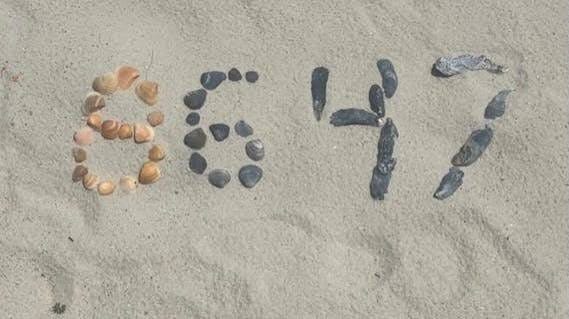
It is the second time the Trump administration has indicted James Comey. The first indictment, filed in September 2025, accused him of making false statements and obstructing a congressional investigation related to his 2020 Senate testimony. That case was dismissed by a federal judge who found that the prosecutor who secured the indictment — Lindsey Halligan, a former Trump lawyer — had been unlawfully appointed. The same judge dismissed a concurrent indictment against New York Attorney General Letitia James on the same grounds. The administration refiled. This time against Comey, the charge is the beach photo.
Acting Attorney General Todd Blanche held a press conference Tuesday to announce the indictment. He was asked by CNN’s Evan Perez why the Justice Department had sought an arrest warrant in the case. He said grand juries issue warrants, not the DOJ. He was asked by NBC News how federal prosecutors would prove that Comey “knowingly and willfully” made a threat — the core legal requirement of the statute. He said there had been “a tremendous amount of investigation” and declined to discuss the evidence. “I am not going to talk about the evidence that we have,” Blanche said. “That’s unfair to him. It’s unfair to the prosecutors.” He also noted it was “very premature” to discuss whether Comey might testify. Immediately after the press conference, Blanche was photographed arriving at the White House.
The legal standard at issue is not trivial. The statute — 18 U.S.C. § 871 — requires proof that the defendant “knowingly and willfully” threatened the president, and that a “reasonable recipient familiar with the circumstances” would interpret the communication as a serious expression of intent to do harm. CNN legal analyst Elie Honig, a former federal prosecutor, said on air the indictment was “deeply flawed” and questioned how prosecutors could establish the intent element. Comey has said publicly and repeatedly that the post was not intended as a threat. The grand jury that indicted him was convened in North Carolina — where Comey has a beach house and where the photo was taken — not in Washington, where Comey lives and where the alleged harm to the president would presumably be felt. Comey’s attorneys declined to comment Tuesday. If convicted on both counts, he faces a maximum of 10 years in prison.
The context for the international press is straightforward and damning. Comey was the FBI director who oversaw the investigation into Russian interference in the 2016 election. Trump fired him in May 2017 — while that investigation was ongoing. Comey wrote a book about it. He went on television. He became, in the Trump political universe, a symbol of the “deep state” institutions that Trump has spent two terms dismantling. The DOJ indicted him in September 2025 on charges a judge threw out within months. It has now indicted him again — this time for arranging seashells on a beach — on the same day it is managing a War Powers constitutional deadline, a stalled Iran war, and a second Comey family legal matter: a judge ruled Tuesday that a separate lawsuit brought by Comey’s daughter Maurene — a former federal prosecutor fired from the DOJ — can proceed in court.
The pattern matters as much as the charge. The Trump DOJ has now brought criminal charges against James Comey twice. It brought charges against Letitia James — dismissed. It brought charges against other Trump critics. It fired prosecutors who declined to pursue political targets and replaced them with loyalists. The Comey beach photo indictment arrives on a specific day: two days before the War Powers deadline, amid stalled Iran diplomacy, in a week when the administration is asking Congress to trust its accounting of a war it has refused to document. Blanche went straight from the press conference to the White House.
🌍 TRANSLATOR’S NOTE: The international press has the full context for this story in a way that the American domestic news cycle, moving quickly between developments, can lose. Al Jazeera covered Comey’s firing in 2017, the Russia investigation, and the subsequent years of Trump’s attempts to pursue legal action against perceived enemies — and has covered Tuesday’s indictment in that context. For international audiences, the beach photo indictment is not a surprising development — it is a predictable next step in a documented pattern of using the Justice Department as a political instrument. The specific charge — a photo of seashells — has received extensive coverage abroad precisely because it appears, to international observers, as a demonstration of what happens to the rule of law when a government decides to prosecute its critics regardless of the legal foundation. NPR noted Tuesday that the first Comey indictment was dismissed on grounds the prosecutor was unlawfully appointed — the same grounds as the concurrent Letitia James dismissal — and that the administration has simply refiled a new theory of prosecution. That is the story the international press is telling: not a single indictment, but a methodology.
🇺🇸 WHAT AMERICAN READERS NEED TO KNOW: The former FBI director who oversaw the Russia investigation has been indicted by the Trump DOJ for the second time. The first indictment was thrown out because the prosecutor was unlawfully appointed. This one is based on a beach photo. The acting attorney general could not explain at his press conference how prosecutors would prove Comey intended a threat. He then went to the White House. If the legal standard for threatening the president is posting a photo of seashells with numbers that can be interpreted as a reference to the 47th president, the question the American public should be asking is not whether James Comey meant it. It is what other speech acts, posts, or images might meet the same standard — and who decides.
Sources: CNN (US — primary reporting, indictment details, Blanche press conference, Honig reaction, confirmed this session); NBC News (US confirmation — two-count indictment, intent standard, Blanche quote on evidence, confirmed this session); Washington Post (US, centre-left — second indictment framing, Maurene Comey lawsuit detail, confirmed this session — Tier 2 label); NPR (US confirmation — Blanche quote, first dismissal grounds, pattern framing, confirmed this session); DOJ press release (primary source — indictment text, charges, maximum penalty, confirmed this session)
WAR DAY 59 | NUMBERS AT PUBLICATION
🇮🇷 Iran: 3,636+ killed (HRANA floor estimate — 1,701 civilians, 1,221 military, 714 unclassified; FROZEN since Day 38/April 7; no updated HRANA report confirmed this session)
🇱🇧 Lebanon: At least 2,509 killed, 7,755 wounded (Lebanon Health Ministry — last confirmed April 26 via AFP; no updated Ministry figure confirmed this session)
🇮🇱 Israel: At least 28 killed (last confirmed this session — not yet updated on Al Jazeera live tracker)
🌍 Gulf states: At least 28 killed in Iran-attributed attacks (Al Jazeera live tracker — last confirmed Day 44; not updated this session)
🇺🇸 US military: 13 deaths confirmed (CENTCOM — unchanged)
🛢️ Brent crude: $111.26/barrel close (CNBC, confirmed this session — intraday high $112.70, highest since March 31)
⛽ US gas: $4.176/gallon regular (AAA via CNBC — highest since August 2, 2022)
📉 US markets: S&P 500 −0.49% to 7,138.80; Nasdaq −0.9% to 24,663.80; Dow −0.05% to 49,141.93 (CNBC, confirmed this session)
Sourcing note: Iran civilian casualties sourced to HRANA (US-based Human Rights Activists News Agency), which relies on a network of activists inside Iran and represents a floor estimate. AP is running a separate figure of 3,375 reflecting a different methodology. ROTWR continues to use the HRANA floor estimate per locked methodology. Methodology differs between all sources; figures should not be treated as directly comparable.
WATCH LIST
🔴 May 1 War Powers deadline — two days. The administration’s likely move is a 30-day extension. That extension is legally intended for safe troop withdrawal, not continued combat. Watch for any White House written certification to Congress, any AUMF filing, or any Democratic lawsuit filing Thursday.
🔴 Iran counter-proposal. Rubio rejected the three-phase proposal Tuesday. No counter has been issued. Brent at $111 is the market’s verdict on the diplomatic stalemate. Watch for any Pakistani or Omani readout, and any US response before the War Powers deadline forces a different calculation.
🟡 Comey legal response. His attorneys declined to comment Tuesday. Watch for a response from Comey’s legal team and any early court filings in the Eastern District of North Carolina. The intent element is the case’s central vulnerability — watch for defense motions challenging the sufficiency of the indictment.
🟡 GCC-Saudi response to UAE OPEC exit. Saudi Arabia has not responded publicly. The next OPEC+ meeting is Wednesday in Vienna. Watch for any Saudi statement and for whether the cartel’s remaining members signal stability or further fragmentation.
“Whenever the people are well informed, they can be trusted with their own government.” — Thomas Jefferson, 1789