
The Rest of the World Report | April 27, 2026 — Morning Briefing
Iran War & Beyond

Weekday morning and evening editions. Saturdays once. Good news on Sundays. All sources labeled.
1. WHAT THE REST OF THE WORLD WATCHED HAPPEN. WHAT AMERICA IS ONLY NOW BEING TOLD.
On March 1, Al Jazeera published video of an Iranian drone striking Camp Buehring, a US military base in northern Kuwait. Smoke billowed from the installation. The footage was not classified. It was not disputed. It ran on screens across the Middle East, and across the world, as it happened. For three consecutive days following the February 28 launch of Operation Epic Fury, Al Jazeera correspondents reported live from Kuwait City, Doha, and Dubai as explosions shook Gulf capitals and Iranian missiles and drones struck American bases in Kuwait, Qatar, the UAE, and Bahrain. This was not a secret. It was the news.
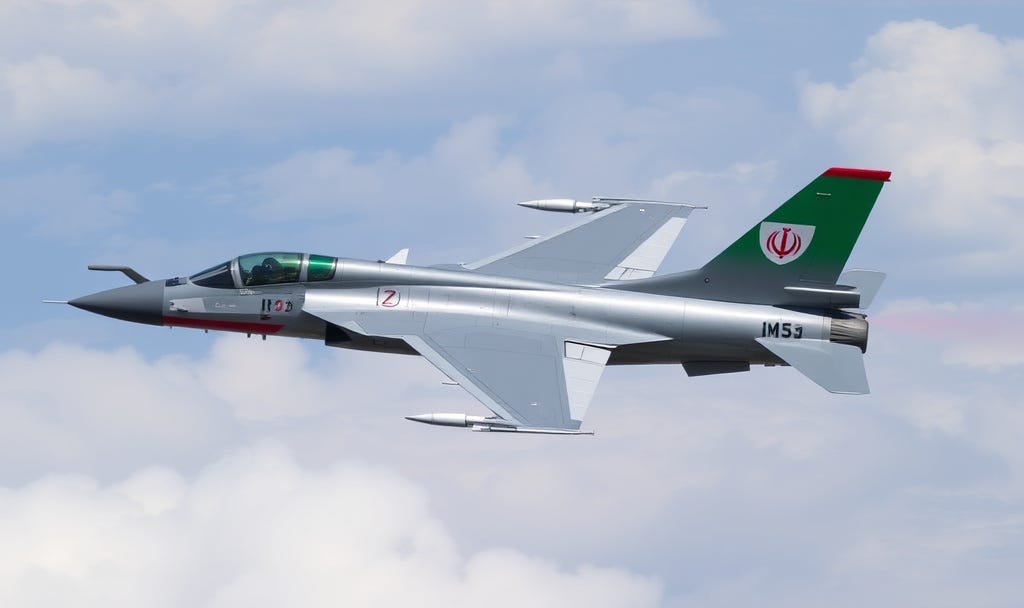
Eight weeks later, on Friday, NBC News published a report based on three US officials, two congressional aides, and a damage assessment by the American Enterprise Institute revealing that Iran struck more than 100 targets across 11 American military bases in seven countries — damage the Pentagon has not disclosed to the public and has refused to share with members of Congress. For American audiences, this landed as a bombshell. For audiences who had been watching Al Jazeera in March, it was confirmation of what they had already seen.
The new details in the NBC report are significant. Among them: an Iranian Air Force F-5 fighter jet — a Cold War-era aircraft first developed in the 1960s, with no stealth capability and no advanced guidance systems — successfully penetrated a multi-layered US air defense network at Camp Buehring and conducted a bombing run. Two officials described it to NBC as “the first time an enemy fixed-wing aircraft has struck an American military base in years.” Patriot systems and close-range interceptors failed to stop it. Analysts suggest the F-5 flew low enough to exploit the gap between radar horizon and response time — a vulnerability the most expensive air defense architecture in the world did not close. The F-5 is not a sophisticated machine. Iran has flown it for decades under sanctions that prevented upgrades or replacements. That it got through is the point.
The full damage picture, per the AEI assessment and US officials: warehouses, command headquarters, aircraft hangars, satellite communications infrastructure, runways, and radar systems destroyed or damaged across the region. Equipment lost includes MQ-9 Reaper drones, MC-130 aircraft, and transport helicopters. Total repair costs estimated at well over $5 billion. And to ensure the American public could not independently verify any of it, the administration asked private satellite companies — including Planet Labs — to black out imagery of affected bases. Planet Labs disclosed the blackout to customers in an April 4 email. It remains in effect.
Republican congressional aides are on the record. “No one knows anything. And it’s not for lack of asking,” one told NBC. “We have been asking for weeks and not getting specifics, even as the Pentagon is asking for a record high budget.” The Pentagon declined to provide damage assessments, citing “operational security.” Defense Secretary Pete Hegseth last week said US forces had delivered “a decisive military result in just weeks.” On Saturday, President Trump told reporters Iran “has been obliterated.”
🇺🇸 What American readers need to know: The information gap in this story runs in one direction. Viewers across the Middle East watched American bases burn in real time. What NBC has now confirmed — the full scope, the F-5 detail, the $5 billion figure, the satellite blackout — is the accounting the American public was specifically denied. The Pentagon won’t provide it to Congress. The administration suppressed the satellite imagery that would have allowed independent verification. Eight weeks into this war, what the rest of the world already knew is finally being reported at home.
Sources: NBC News (US — primary reporting, US officials and congressional aides, confirmed this session); Al Jazeera (Qatar, state-funded/editorially independent — real-time video reporting of Camp Buehring strike March 1 and Gulf base strikes February 28–March 2, confirmed this session); The Aviationist (defense specialist — F-5 strike analysis, confirmed this session); IBTimes UK (UK, professionally sourced — satellite blackout detail, confirmed this session); American Enterprise Institute (center-right think tank — damage assessment, labeled)
2. TRUMP CANCELS THE DIPLOMATS. IRAN SENDS THEM TO MOSCOW.
The weekend’s diplomatic picture is stark. On Saturday, President Trump canceled the planned trip by special envoy Steve Witkoff and Jared Kushner to Islamabad, where Iranian Foreign Minister Abbas Araghchi had gone to continue ceasefire negotiations with Pakistani mediators. Trump’s stated reason: the travel time. “We’re not going to spend 15 hours in airplanes all the time going back and forth to be giving a document that was not good enough,” he told reporters. “We have all the cards.” Iran’s side: Araghchi said he had a “very fruitful visit to Pakistan” and was “waiting to see if the US is truly serious about diplomacy.”
The Iranian delegation had left Islamabad before the Americans arrived — Araghchi never met with US officials. He traveled instead to Muscat, Oman, on Sunday to meet with Sultan Haitham on Hormuz security. This morning he is in St. Petersburg for talks with Russian President Vladimir Putin — a significant escalation in Iran’s diplomatic reach, signaling that Tehran is actively building external support rather than waiting on Washington. Iranian media reported Araghchi’s agenda in Moscow includes discussion of “a new legal regime over the Strait of Hormuz,” war reparations, and guarantees against future US attacks. Iran’s nuclear program — the central US demand — was not listed.
The ceasefire framework, technically extended indefinitely by Trump last week hours before it was set to expire, is holding on paper. On the ground it is a different story. The US naval blockade has now turned back 38 ships from Iranian ports. Iran’s military command has warned that if the blockade continues, US forces will “face the response of Iran’s powerful armed forces.” Iran’s position is explicit: it will not return to the negotiating table until the blockade is lifted. The US position is that the blockade stays until Iran agrees to nuclear terms. Those two positions have not moved.
Then, in a detail that cuts against the image of total diplomatic collapse, Trump said Saturday that Iran sent a “much better” offer — relayed through Pakistani mediators — just ten minutes after he canceled the Witkoff-Kushner trip. He called it “not enough.” The ISW/Critical Threats evening assessment confirmed no discussion of Iran’s nuclear program in Araghchi’s weekend agenda — the issue the US has called non-negotiable.
🇺🇸 What American readers need to know: The diplomatic channel is not dead — but it is being conducted at arm’s length, through intermediaries, while Iran’s foreign minister meets with Putin and the US Navy blocks Iranian ports. The two sides are not talking directly. Pakistan is still working. Oman is still working. But the gap between what Washington demands — permanent nuclear renunciation — and what Tehran will discuss — blockade relief, reparations, Hormuz sovereignty — has not narrowed. Week nine of this war begins with no negotiations scheduled and no framework agreed.
Sources: CNN (US confirmation — Trump cancellation, Araghchi Oman visit, confirmed this session); Axios (US — Trump direct quotes on cancellation, confirmed this session); NBC News (US confirmation — Pakistani sourcing, ceasefire extension timeline, confirmed this session); Critical Threats / ISW (AEI-affiliated, center-right — Araghchi Moscow agenda, labeled, confirmed this session)
3. THE LEBANON CEASEFIRE IS BEING EVACUATED
The three-week extension of the Israel-Lebanon ceasefire that President Trump announced Thursday is, on the ground, already coming apart. On Sunday — three days after the extension was declared — Israeli strikes killed 14 people in southern Lebanon, including two children and two women. Lebanon’s Health Ministry called it the deadliest single day since the ceasefire took effect on April 16. An AFP tally puts the total killed since the ceasefire began at at least 36, before Sunday’s toll is added to the running count.
The sharper development is geographic. Israel issued new evacuation orders Sunday for seven Lebanese towns that lie north of the Litani River — beyond the roughly 10-kilometer buffer zone Israeli forces have occupied since before the ceasefire. The IDF is now telling civilians to leave areas it had not previously claimed as an operational zone, while simultaneously conducting strikes in those areas. Netanyahu’s framing at his cabinet meeting was unambiguous about what governs Israeli conduct: “From our perspective, what obliges us is the security of Israel, the security of our soldiers, the security of our communities.” Not the ceasefire terms.
Hezbollah’s response was equally direct. The group said it would not stop attacking Israeli troops in Lebanon or communities in northern Israel as long as Israel continued its “ceasefire violations,” and that it would not wait for diplomacy that has “proven ineffective” or Lebanese authorities that had “failed to protect the country.” On Sunday, Hezbollah struck Israeli troops and then attacked the rescue force that came to evacuate casualties — including a drone swarm targeting a newly established Israeli artillery position in Biyyada. One Israeli soldier was killed, six more wounded.
Both sides are conducting operations. Both sides are accusing the other of violations. Israel is expanding its operational footprint beyond its own declared buffer zone. Hezbollah is explicitly rejecting the ceasefire framework. The civilian population is caught between them: Al Jazeera’s correspondent in Tyre reported thousands of people again fleeing their homes on Sunday, joining the hundreds of thousands already displaced. The Lebanese Health Ministry counts at least 277 women, 177 children, and 100 medical workers among the more than 2,500 killed since March 2.
🇺🇸 What American readers need to know: Trump brokered a ceasefire extension on Thursday. By Sunday it had produced the deadliest day in Lebanon since the truce began and new displacement orders for civilians beyond Israel’s own buffer zone. Iran has made the Lebanon fighting a condition of any nuclear deal — it will not negotiate while Lebanon burns. Which means the crumbling of this ceasefire is not just a Lebanon story. It is a direct obstacle to ending the wider war.
Sources: Reuters (wire — evacuation orders, Sunday death toll, confirmed this session); Al Jazeera (Qatar, state-funded/editorially independent — Tyre correspondent, displacement figures, confirmed this session); AFP via Korea Herald (wire — deadliest day framing, Health Ministry toll, confirmed this session)
4. THE FLOTILLA IS AT SEA
The Global Sumud Flotilla — the largest civilian-led maritime mission in history aimed at breaking Israel’s blockade of Gaza — departed Sicily on Sunday and is now at sea in the Mediterranean, bound for Gaza. The fleet has grown significantly since departing Spain: 25 Italian vessels joined the original Spanish contingent at the port of Siracusa last Thursday, bringing the total to more than 60 boats. Organizers say the current fleet exceeds the entire size of last year’s mission, which was intercepted by Israeli forces in international waters last October. Greenpeace’s Arctic Sunrise is among the vessels.
The flotilla’s route takes it from Sicily toward Greece, with Gaza as its ultimate destination. Israel has called it “not a humanitarian mission but a political provocation” and has previously demonstrated its willingness to intercept vessels in international waters, board them by force, and detain participants — as it did in October 2025, when activists reported psychological abuse and sexual humiliation during detention. Amnesty International has called on Mediterranean states to guarantee safe passage and warned against any repeat of 2025’s “unlawful interceptions.”
A parallel North Africa Sumud Land Convoy is also underway, with approximately 1,000 people expected to join a journey of 20 to 27 days overland toward Gaza. In Brussels last week, a Global Sumud Parliamentary Congress convened including members of the European Parliament and UN Special Rapporteur Francesca Albanese, producing what organizers called the “Brussels Declaration” — a call for a humanitarian maritime corridor to Gaza grounded in international law and verified by the United Nations.
Israel has not publicly stated its intentions toward the current fleet. As of publication, the flotilla has not been intercepted.
🇺🇸 What American readers need to know: More than 60 boats carrying over 1,000 people from dozens of countries — including American citizens — are sailing toward Gaza in defiance of an Israeli blockade. The last time this happened, Israel boarded the vessels in international waters and held participants in detention under conditions multiple human rights organizations described as abusive. The US has not taken a public position on the flotilla. Amnesty International has. The UN Special Rapporteur for human rights in the occupied territories has. The boats are moving.
Sources: Jerusalem Post (Israel, right-centre — Sicily departure, fleet size, confirmed this session); Middle East Monitor (UK-based, pro-Palestinian editorial lean — departure confirmed this session, labeled); Euronews (European, broadly centrist — flotilla background and Israeli response framing, confirmed this session); Amnesty International (primary source — safe passage statement, confirmed this session); Global Sumud Flotilla press releases (organizers — fleet composition, Brussels Declaration, confirmed this session)
I will never put the news behind a paywall. If you want to support keeping it free for everyone else, there’s a paid option. That’s all it is.
WAR DAY 58 | NUMBERS AT PUBLICATION
🇮🇷 Iran: 3,636+ killed (HRANA floor estimate — 1,701 civilians, 1,221 military, 714 unclassified; FROZEN since Day 38/April 7; no updated HRANA report confirmed this session)
🇱🇧 Lebanon: At least 2,509 killed, 7,755 wounded (Lebanon Health Ministry, April 26 — IDF struck 14 more Sunday in the deadliest single day since the Lebanon ceasefire began; updated Ministry figure not yet confirmed at publication)
🇮🇱 Israel: At least 28 killed (an 11-year-old girl wounded in a cluster munition strike died April 24 after three weeks in ICU — figure not yet confirmed on Al Jazeera live tracker this session)
🌍 Gulf states: At least 28 killed in Iran-attributed attacks (Al Jazeera live tracker — last confirmed Day 44; not updated this session)
🇺🇸 US military: 13 deaths confirmed (CENTCOM — unchanged)
🛢️ Brent crude: $108/barrel (OilPrice, confirmed this session)
📉 US markets: Not yet open at publication
Sourcing note: Iran civilian casualties sourced to HRANA (US-based Human Rights Activists News Agency), which relies on a network of activists inside Iran and represents a floor estimate. The HRANA figure has been frozen since April 7; the ceasefire has reduced new strike casualties on the Iran front but the count has not been independently updated this session. Methodology differs between sources; figures should not be treated as directly comparable.
WATCH LIST
🔴 Araghchi in Moscow. Iran’s foreign minister meets Putin today. The agenda — Hormuz sovereignty, war reparations, no-strike guarantees — reflects how far Tehran’s diplomatic positioning has moved from Washington’s demands. Watch for any joint Russia-Iran statement on ceasefire terms or the blockade.
🔴 Lebanon buffer zone expansion. Israel is now issuing evacuation orders north of the Litani, beyond its own declared buffer zone. If operations follow the orders into that territory, the ceasefire extension Trump announced Thursday becomes functionally irrelevant. Watch for Lebanese government response and any US reaction to the expanding footprint.
🟡 Flotilla intercept decision. The Global Sumud Flotilla departed Sicily Sunday and is now at sea. Israel has not stated its intentions. The last intercept was in international waters. Watch for any Israeli naval movement or official statement in the next 24–48 hours.
🟡 Iran’s “better offer.” Trump said Tehran sent a “much better” proposal through Pakistan minutes after he canceled Saturday’s talks — but called it “not enough.” The substance has not been disclosed. Watch for any Pakistani or Omani readout on what changed.
“Whenever the people are well informed, they can be trusted with their own government.” — Thomas Jefferson, 1789